How to Rank on Google Maps
Learn how to rank on Google Maps and get into the local 3-pack — the step-by-step work that puts a business on the map when nearby customers are ready to call.
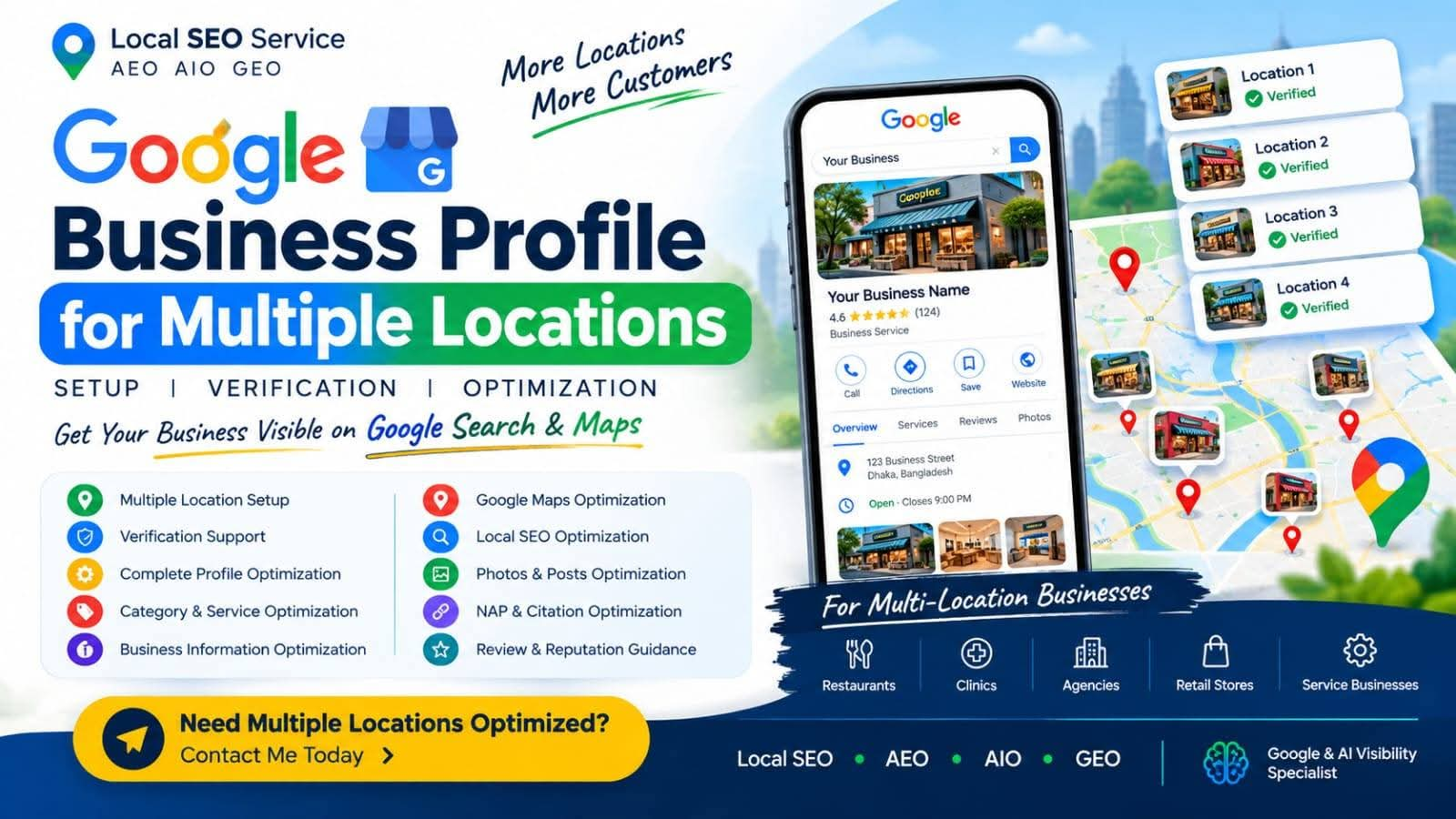
When someone searches for a service “near me” on Google, the first thing they see is a map with three businesses listed underneath it. That is the local 3-pack — and it is where most of the calls, direction requests, and customers go.
Ranking on Google Maps is not about luck. Google decides which businesses appear there using three things it states publicly: relevance, distance, and prominence. This guide explains how to rank on Google Maps — what each of those means and the step-by-step work that moves a business up the map — the same work we do for our clients every day.
Why It MattersWhy Google Maps Ranking Matters
A website can rank well on Google and still lose customers to a competitor who shows up on the map first. Maps results sit above the normal organic results on a phone, and they come with the exact things a ready-to-buy customer needs: a call button, directions, opening hours, photos, and reviews.
A business that ranks on Maps is visible at the exact moment a customer is choosing who to call. A business that does not rank there is invisible at that moment — even if its website is good.
That is why Maps ranking is the most valuable part of local SEO for most small businesses: it turns searches into phone calls.
Every step in this guide about how to rank on Google Maps is aimed at that moment — being the business a nearby customer calls.
The Three FactorsHow Google Decides Who Ranks on Maps
Google explains Maps ranking with three factors:
Relevance
How well your business matches what the person searched for. A complete, accurate profile with the right categories and services tells Google what you actually do.
Distance
How far your business is from the searcher (or from the place they searched for). You cannot change your location — but you can make sure your service area and address are set correctly.
Prominence
How well known and trusted your business is. Reviews, ratings, photos, citations across the web, links, and how active your profile is all feed into prominence.
Distance you cannot control. Relevance and prominence you can — and that is where all the work below goes.
In other words, learning how to rank on Google Maps means working on relevance and prominence.
The 8 Steps8 Steps to Rank Higher on Google Maps
Claim and fully complete your Google Business Profile
Everything starts with your Google Business Profile (GBP) — the free listing that powers your Maps pin. If you have not claimed it, do that first. Then fill in every field: exact business name (your real name, no keyword stuffing), correct address, phone number, website, opening hours (including holiday hours), and a clear description of what you do.
An incomplete profile is the single most common reason a business does not rank. Google cannot show a business it does not fully understand.
If you want the full walkthrough, read our Google Business Profile Optimization guide.
Pick the right primary category — and useful secondary ones
Your primary category is one of the strongest relevance signals you have. Choose the category that describes your main service most precisely, not the broadest one. A “Local SEO agency” will match better than a generic “Marketing agency” for someone searching for local SEO.
Then add secondary categories for the other services you genuinely offer. Do not add categories for services you do not provide — mismatched categories hurt relevance instead of helping it.
Get more real Google reviews — and reply to every one
Reviews are the biggest prominence signal for most local businesses. A steady flow of recent, genuine reviews — with your replies — tells Google that customers trust you and that the business is active.
Ask happy customers for a review at the moment they are happiest, right after the work is done. Make it easy: send them your direct review link. Never buy reviews and never write fake ones — Google removes them, and a penalised profile is far worse than a quiet one.
Reply to every review, good or bad. A thoughtful reply to a bad review shows future customers how you handle problems, and it shows Google the profile is managed.
Add photos and videos regularly
Businesses with photos get more attention — customers look at them before they call. Upload real photos: your shop or office, your team at work, your products, completed jobs. Add new photos regularly, not once and never again; a profile that keeps getting fresh photos looks alive to Google and to customers.
Videos help too: a short clip of your work or your premises is worth more than a stock image.
Keep your name, address and phone (NAP) consistent everywhere
Your business name, address, and phone number must be exactly the same on your website, your Google Business Profile, Facebook, and every directory that lists you. Even small differences — “Street” vs “St”, a different phone number on one site — confuse Google about which business is which.
Pick one exact version and use it everywhere. Our canonical details are: Local SEO Service AEO AIO GEO, Rangpur, Bangladesh, +8801774241270, localseoservicaeoaiogeo@gmail.com.
Build local citations and listings
A citation is any mention of your business name, address, and phone on another website — a local directory, a chamber of commerce listing, an industry site. Consistent citations across trusted sites strengthen prominence and help Google trust that your business is real and established.
Start with the big, relevant ones for your area and industry, keep the details identical to step 5, and remove or correct any old, wrong listings you find.
Add local keywords to your website
Google Maps ranking and website ranking support each other. Your website should say clearly — in its titles, headings, and content — what you do and where you do it. A page titled “Local SEO Services in Dhaka” with real, useful content about that service helps Google connect your business to those searches.
That is the work of local SEO: your website, your profile, and your citations all saying the same true story about your business. Read our guide to what local SEO is for the full picture.
Post updates, answer Q&A, and stay active
Google Business Profile lets you publish posts (offers, news, new services), answer questions in the Q&A section, and update your hours. A profile that is updated regularly signals an active, operating business.
Answer the questions people ask in Q&A yourself, before someone else answers them wrong. Post when you have something real to say — a new service, a seasonal offer, a completed project. Activity is a small signal on its own, but it is part of the pattern Google reads: a business that is alive.
The mistakes below are the ones that most often hold back a business that is learning how to rank on Google Maps.
Avoid TheseCommon Mistakes That Hurt Google Maps Ranking
Keyword-stuffing the business name
Adding extra keywords to your business name on Google violates Google’s rules and can get the profile suspended. Use your real business name.
A wrong or inconsistent address
One wrong listing can split your prominence across two versions of the same business.
Ignoring reviews
Unanswered reviews — especially negative ones — cost you customers and signal a neglected profile.
One photo and nothing else
A profile with no photos looks abandoned next to competitors with full galleries.
Expecting Maps ranking without a website
A fast, complete website with local content supports the profile. The two rank together, not separately.
TimelineHow Long Does It Take to Rank on Google Maps?
There is no fixed timeline and no honest provider can guarantee a position or a date. In a low-competition area with a complete profile and a few good reviews, movement can show in weeks. In a competitive city and category, it usually takes months of steady work — reviews accumulating, citations building, content growing.
That steady work is the whole answer for anyone wondering how to rank on Google Maps in a competitive market: there is no shortcut, only the work above, done month after month.
What is certain is the direction: businesses that do the work above, consistently, climb. Businesses that do nothing stay where they are while competitors pass them.
FAQFrequently Asked Questions
These are the questions people ask most about how to rank on Google Maps.
What is the Google Maps 3-pack?
The 3-pack is the block of three business listings Google shows with the map at the top of local search results. It is the most visible place a local business can appear, and it is decided by relevance, distance, and prominence.
Is Google Maps ranking the same as local SEO?
Maps ranking is the most visible part of local SEO. Local SEO covers the whole picture — your website, your Google Business Profile, citations, and reviews — and Maps ranking is the result of doing all of it well.
Do I need a website to rank on Google Maps?
You can appear on Maps with a profile alone, but a complete website with local content strengthens relevance and prominence and helps you rank higher and more stably. Google itself links your profile to your site.
How many reviews do I need to rank on Google Maps?
There is no magic number. What matters is a steady flow of genuine, recent reviews, a good average rating, and your replies — compared with the competitors in your area and category.
Can I pay Google to rank higher on Maps?
No. The 3-pack is organic — it cannot be bought. Google Ads can place a sponsored listing above it, but the organic map positions are earned through relevance, distance, and prominence.
Get a Free Audit of Your Maps Visibility
Not sure where your business stands on Google Maps? Run our free audit, or contact us and ask for a free manual audit. We will check your profile, your reviews, your citations, and your website — and tell you honestly what is holding your Maps ranking back, and what to fix first.
Get My Free SEO Audit View Pricing — from $55
Prefer to talk? Call +880 1774-241270 or email localseoservicaeoaiogeo@gmail.com.
In short, how to rank on Google Maps comes down to relevance and prominence: a complete Google Business Profile, the right categories, a steady flow of genuine reviews, fresh photos, consistent NAP details, trusted citations, local content on your website, and a profile that stays active. Do that work consistently, and your business climbs the map.
Keep ReadingMore From Our Local SEO Services Guides
Once you understand how to rank on Google Maps, the same clear work applies to the rest of your visibility. Start with our Google Business Profile Optimization guide, explore our local SEO services and SEO services, or read what local SEO is for the full picture. Maps ranking, your website, and your citations all tell the same true story about your business.
Leave a Reply